
 VI
VI EN
EN




LEAD-UP ACADEMY PARTNERS WITH MOBIFONE ĐẮK LẮK TO STRENGTHEN AI APPLICATION CAPABILITIES AMONG OFFICIALS IN QUẢNG PHÚ COMMUNE
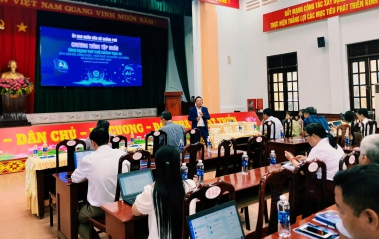
On 29–30 September 2026, Lead-UP Academy of Practical Management, in collaboration with MobiFone Đắk Lắk – a branch of MobiFone Telecommunications Corporation, delivered the training programme “Applying AI in Public Administration – Enhancing Work Efficiency and the Quality of Services for Residents of Quảng Phú Commune.” The programme commenced with a class for officials, civil servants, and public employees working within the Party Committee and Vietnam Fatherland Front of Quảng Phú Commune, Đắk Lắk Province.
Lead-UP Academy Partners with Global Factories Group: “Better Together” – Embracing Differences, Strengthening Team Cohesion
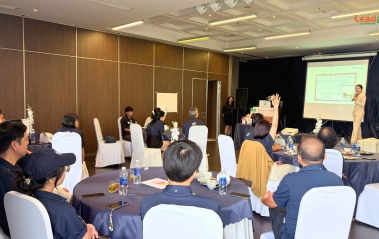
A dynamic day of learning, unexpected challenges, and practical lessons in teamwork marked the success of the “Better Together – Understand - Align - Move Together” training program for employees of Global Factories Group (GF), delivered in collaboration with Lead-UP Academy.
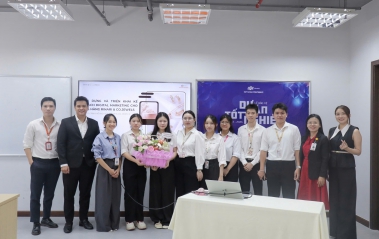
Lead-UP Academy collaborates with FPT Polytechnic Da Nang in graduation project assessment
On 8 September 2026, Lead-UP Academy of Practical Management (Lead-UP Academy) served on the Graduation Project Defense Panel for Digital Marketing students at FPT Polytechnic Da Nang during Round 3 of 2026. This activity represents a further step in implementing the Memorandum of Understanding (MOU) signed between the two organizations, linking industry engagement with the development of students’ professional competencies.
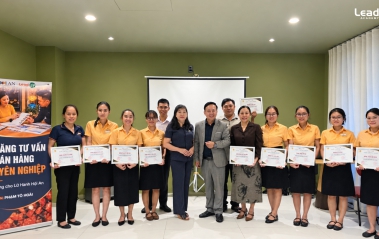
CLOSING CEREMONY OF THE “PROFESSIONAL CONSULTATIVE SELLING SKILLS” TRAINING PROGRAMME FOR HOI AN TRAVEL
Following two days of active learning and practical application, the “Professional Consultative Selling Skills” training programme for Hoi An Travel, delivered by Lead-UP Academy, concluded in an atmosphere of enthusiasm and strong determination. The closing ceremony provided an opportunity to recognise participants’ collective efforts while reaffirming the partnership between the company and the training provider in developing workforce capabilities.
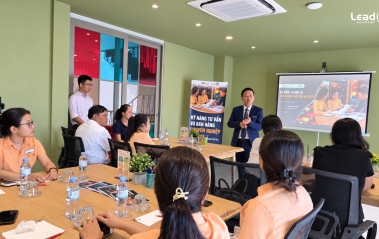
OPENING CEREMONY OF THE “PROFESSIONAL CONSULTATIVE SELLING SKILLS” TRAINING PROGRAMME FOR HOI AN TRAVEL
On 4 September 2026, Lead-UP Academy of Practical Management, in collaboration with Hoi An Travel, conducted the first day of the “Professional Consultative Selling Skills” training programme. The programme was delivered and facilitated by consulting and training expert Pham To Hoai, Founder of Lead-UP Academy of Practical Management.
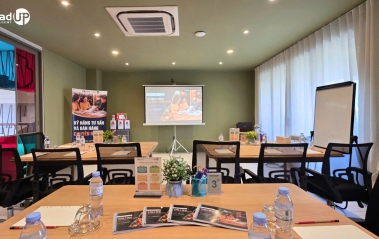
LEAD-UP ACADEMY READY TO DELIVER THE “PROFESSIONAL CONSULTATIVE SELLING SKILLS” TRAINING PROGRAM FOR HOI AN TRAVEL
Following an extensive process of research, assessment, and meticulous preparation, Lead-UP Academy has completed the final arrangements for the delivery of the “Professional Consultative Selling Skills” training program, specifically tailored to the Hoi An Travel team.
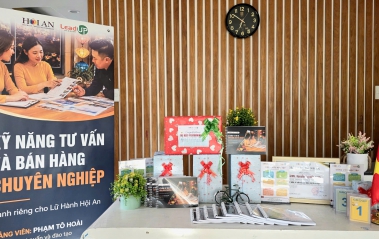
LEAD-UP ACADEMY READY TO DELIVER THE “PROFESSIONAL CONSULTATIVE SELLING SKILLS” TRAINING PROGRAM EXCLUSIVELY FOR HOI AN TRAVEL
Immediately following the National Day holiday on September 2, Lead-UP Academy will continue its partnership journey with Hoi An Tourist Holding Company through the two-day “Professional Consultative Selling Skills” training program, specially designed for the Hoi An Travel team. Rather than being merely a course on tour-selling techniques, the program aims to facilitate a critical shift: from simply providing “tour proposals and quotations” to delivering consultative solutions, designing customer experiences, and managing customers throughout the entire sales journey.
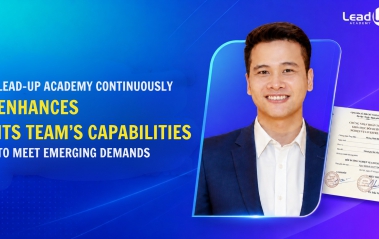
LEAD-UP ACADEMY CONTINUOUSLY ENHANCES ITS TEAM CAPABILITIES TO MEET EMERGING DEMANDS
As artificial intelligence, digital communications, and e-commerce continue to transform how businesses engage with their customers, the capabilities of training professionals must also be continuously updated. At Lead-UP Academy, team development is not merely about expanding the number of experts. More importantly, it involves the continuous enhancement of professional expertise, practical experience, and the ability to translate knowledge into solutions aligned with real-world business operations.
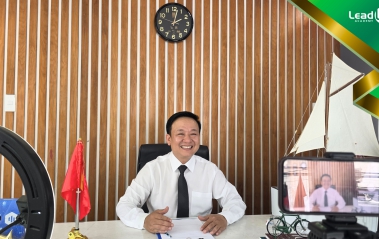
LEAD-UP ACADEMY LAUNCHES THE “90-SECOND PRACTICAL MANAGEMENT” VIDEO SERIES
Lead-UP Academy officially launched the “90-Second Practical Management” video series in mid-July 2026. This project delivers concise content focused on common situations encountered by managers in the course of business operations. The program was developed from an initiative by the Lead-UP Academy R&D Team, produced by the Media Team, and supported throughout by Consulting and Training Expert Phạm Tô Hoài – Founder of Lead-UP Practical Management Academy.
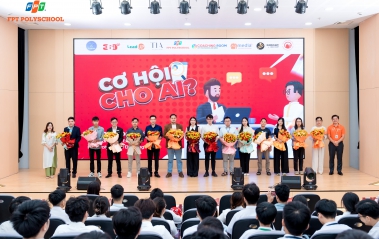
LEAD-UP ACADEMY ACCOMPANIES THE “WHO GETS THE OPPORTUNITY? – 2026” PROGRAM AT FPT POLYSCHOOL DA NANG
On June 28, 2026, Lead-UP Academy accompanied the “Who Gets the Opportunity? – 2026” program, held at the 13th-floor Auditorium of FPT PolySchool Da Nang, 137 Nguyen Thi Thap Street, Da Nang City.
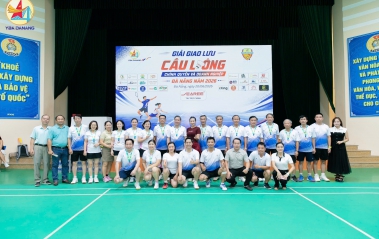
LEAD-UP ACADEMY PARTICIPATES IN THE 2026 BADMINTON EXCHANGE TOURNAMENT BETWEEN ENTERPRISES AND THE GOVERNMENT OF DA NANG CITY
Connecting – Engaging – Spreading the Spirit of Sports and Accompanying the Business Community On June 20, 2026, within the framework of the 2nd YBA Da Nang Sports Festival – 2026, representatives of Lead-UP Academy were honored to participate in the 2026 Badminton Exchange Tournament between Enterprises and the Government of Da Nang City upon invitation from the Da Nang Young Entrepreneurs Association.
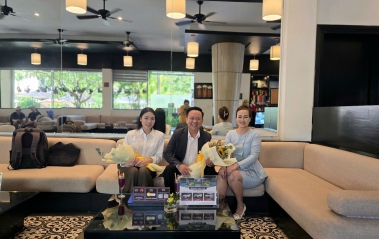
COMPLETION OF PHASE 2 – PROJECT “SERVICE QUALITY ENHANCEMENT CONSULTING – CREATING CUSTOMER EXPERIENCE, SPREADING THE BEAUTY OF HOI AN”
Some projects leave measurable outcomes. Others leave lasting trust. After a series of intensive, immersive, and meaningful on-site engagements, Lead-UP Academy has officially completed Phase 2 of the project “Service Quality Enhancement Consulting (Creating Customer Experience – Spreading the Beauty of Hoi An)” for the hospitality system under Hoi An Tourism – Service Joint Stock Company.
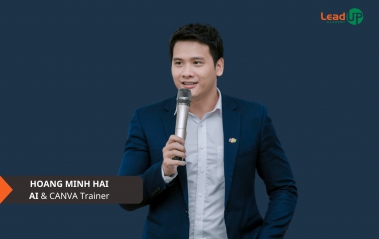
LEAD-UP ACADEMY WELCOMES MR. HOANG MINH HAI TO JOIN ITS TEAM OF PRACTICE-ORIENTED EXPERTS
Expanding Training Capabilities in Digital Transformation, AI Applications & Public Administration Productivity Enhancement for Government Agencies As digital transformation and AI continue to reshape the operations of government agencies, Lead-UP Academy believes that the competitiveness and efficiency of public organizations in the coming period will stem not only from technological infrastructure but also from the ability to empower cadres, civil servants, and public employees to master information technology skills, and safely, practically, and effectively apply technology and cloud data to their daily work.
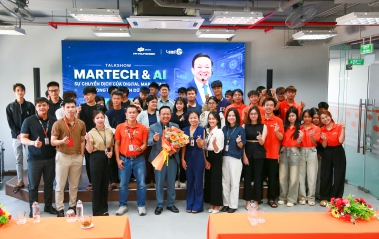
TALK SHOW | MARTECH & AI – THE TRANSFORMATION OF DIGITAL MARKETING IN THE DATA-DRIVEN ERA
In recent years, the rapid advancement of Artificial Intelligence (AI), Big Data, and Marketing Technology (Martech) platforms has been reshaping business operations and significantly influencing workforce demands. Many job roles are being redefined, while new competencies continue to emerge and become essential requirements for the next generation of professionals.
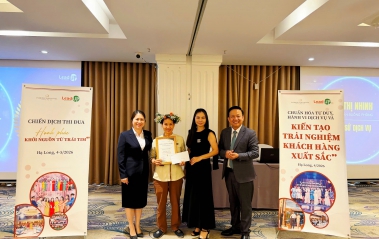
CONCLUDING A PROUD TRANSFORMATION JOURNEY AT PADDINGTON HOTEL HALONG BAYVIEW
After 60 days of implementation, the project “Standardizing Service Mindset and Behaviors while Creating Excellent Customer Experiences,” jointly conducted by Lead-UP Academy and Paddington Hotel Halong Bayview, officially concluded with the Closing Ceremony of the emulation campaign “Happiness Begins from the Heart” - an emotional event marking many proud milestones. This campaign represented a dramatic finishing stage of the 21-day transformation journey carried out throughout the hotel.
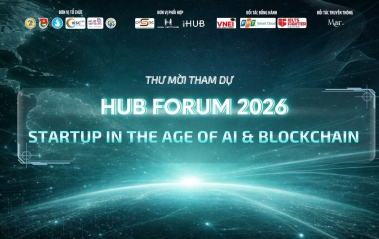
LEAD-UP ACADEMY ACCOMPANIES HUB FORUM 2026: PRESENT TO CONNECT – SPREAD VALUES – DEVELOP THE COMMUNITY
In the context where the business community, startups, and younger generations are facing profound changes in technology, markets, and customer behavior, community connection programs such as HUB FORUM 2026 are no longer merely places for networking or information sharing. More importantly, they serve as spaces where new mindsets are shaped, positive values are amplified, and the spirit of action for sustainable development in the era of AI & Blockchain is fostered.
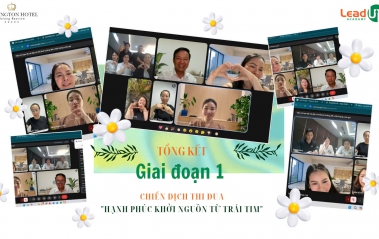
PHASE 1 REVIEW – READY FOR THE NEXT TRANSFORMATION JOURNEY AT PADDINGTON HALONG BAYVIEW HOTEL
After one week of implementing Phase 1 of the project “Standardizing Mindsets and Service Behaviors – Creating Outstanding Customer Experiences,” Lead-UP Academy, in collaboration with the Board of Management of Paddington Hotel Halong Bayview, conducted an online review meeting to reflect on the achievements of Phase 1 and align on the direction for the next phase.
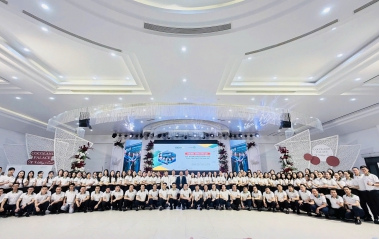
Training Program on Sales Skills and Relationship Building at BIDV Bac Quang Binh
Innovating Methodology – Enhancing Effectiveness – Driving Practical Transformation The training program “Sales Skills and Relationship Building” at BIDV Bac Quang Binh, implemented by Lead-UP Academy, applies Game-Based Learning to transform sales mindset and enhance practical financial advisory capabilities.
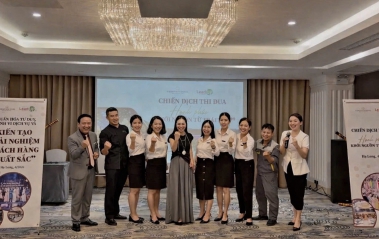
LAUNCH OF THE EMULATION CAMPAIGN “HAPPINESS BEGINS FROM THE HEART” AT PADDINGTON HOTEL HALONG BAYVIEW
Bringing Training into Operations – Shaping a Distinctive Paddington Service Culture Immediately following the completion of the training series “Standardizing Service Mindset and Behaviors, and Creating Exceptional Customer Experiences,” Lead-UP Academy, in collaboration with Paddington Hotel Halong Bayview, officially launched the emulation campaign titled “Happiness Begins from the Heart” - a key initiative aimed at bringing all training content into real operational practice.
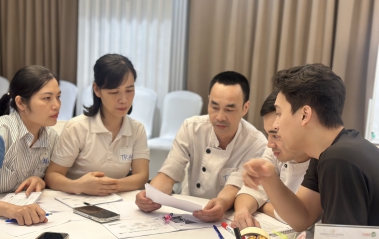
Implementation of class 3 at Paddington Hotel Halong Bayview
From Employee Experience to the Foundation of Exceptional Customer Experience Ha Long, April 2026 – Following the completion of two training classes for the Board of Directors, management team, and frontline staff, Lead-UP Academy continues its collaboration with Paddington Hotel Halong Bayview to implement Class 3 within the program series “Standardizing Service Mindset and Behaviors, and Creating Exceptional Customer Experiences”, targeting support and office staff. The class continues to be led by Mr. Pham To Hoai – Founder, and Ms. Le Thi Ngoc Huyen – COO of Lead-UP Academy.
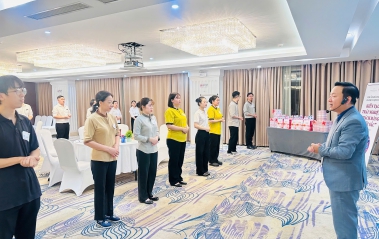
Implementation of Class 2 at Paddington Hotel Halong Bayview: Spreading Service Culture to Frontline Employees
Spreading a heartfelt service culture to frontline employees Ha Long, April 15, 2026 – Following the success of the first training class for the Board of Directors and management team of Paddington Hotel Halong Bayview, Lead-UP Academy has continued with the implementation of Class 2 in the program series titled “Standardizing Service Mindset and Behaviors, and Creating Exceptional Customer Experiences”, with a primary focus on frontline staff who directly serve customers
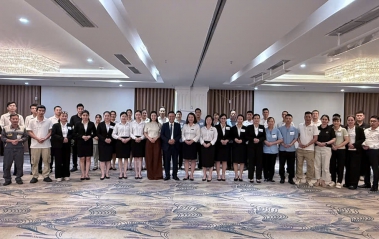
LAUNCH OF A COMPREHENSIVE SERVICE QUALITY ENHANCEMENT TRAINING SERIES
At Paddington Hotel Halong Bayview: Towards Standardization and the Creation of Exceptional Customer Experiences Ha Long, April 13, 2026 – Paddington Hotel Halong Bayview has officially launched the training series titled “Standardizing Service Mindset and Behaviors, and Creating Exceptional Customer Experiences”, marking the beginning of a comprehensive service quality enhancement project for 2026.
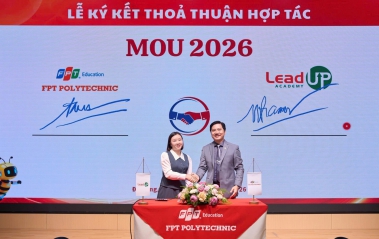
LEAD-UP ACADEMY SIGNS COOPERATION AGREEMENT WITH FPT POLYTECHNIC DA NANG
Within the framework of the BEEMATCHING 2026 – FIND YOUR HIVE program, Lead-UP Academy has officially signed a Memorandum of Understanding (MOU) with FPT Polytechnic Da Nang, marking an important milestone in its strategy to connect education with real-world business practice.
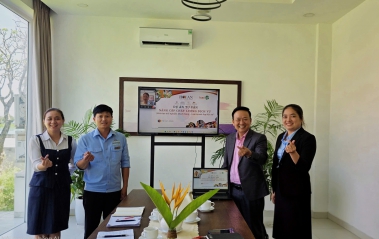
Closing Phase 1 at Tam Thanh Beach Resort & Spa: When service begins from the heart and is expressed through genuine sincerity
Continuing the journey of implementing the project “Operational Strategy Consulting and Customer Experience Management”, Mr. Phạm Tô Hoài – Solutions Director and Project Lead – together with Ms. Lê Thị Ngọc Huyền – Chief Executive Officer of Lead-UP Academy – continued their on-site engagement and immersive experience at Tam Thanh Beach Resort & Spa, the final destination of Phase 1 of this meaningful project. If each property within the system carries its own distinct character, Tam Thanh Beach Resort & Spa leaves a particularly unique impression. It is not defined by sophistication or grandeur, but by a service environment deep enough for one to genuinely feel the sincerity and warmth in every interaction.
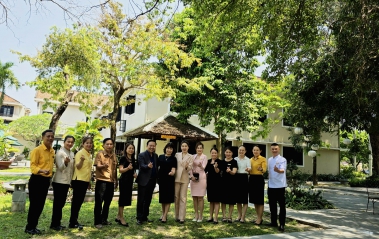
A Journey of Partnership with Hoi An Historic Hotel: When a Growth Mindset Becomes the Foundation for Distinctive Experiences
Following the implementation of the project “Operational Strategy Consulting and Customer Experience Management”, Lead-UP Academy had the opportunity to collaborate with Hoi An Historic Hotel during the initial phase of the project, which involved on-site assessment and practical working sessions at the property.
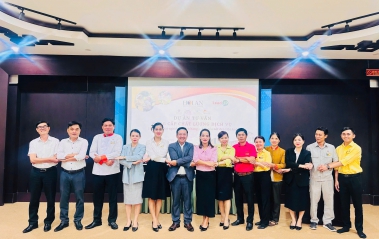
Lead-UP Academy Launches the Project “Operational Strategy Consulting and Customer Experience Management”
After a period of thorough preparation, Lead-UP Academy has officially launched the project “Operational Strategy Consulting and Customer Experience Management”, exclusively designed for Hoi An Tourism – Service Joint Stock Company. Within the framework of this project, Mr. Phạm Tô Hoài (Lead Consultant) and Ms. Lê Thị Ngọc Huyền – Chief Executive Officer of Lead-UP Academy – conducted on-site assessments at three properties within the company’s system, including: Hoi An Beach Resort, Hoi An Historic Hotel, and Tam Thanh Beach Resort & Spa.
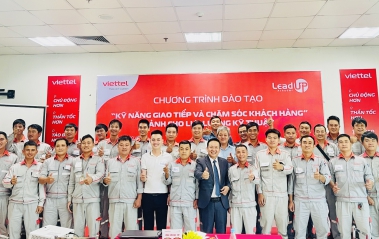
Training Program “Communication and Customer Care Skills” for the Technical Workforce of Viettel Hue – Class 2
Following the success of the previous class, Lead-UP Practical Management Academy continues to collaborate with Viettel Hue to implement the next class in the training series “Communication and Customer Care Skills” for the technical workforce, with the objective of expanding coverage, standardizing competencies, and ensuring consistency in customer service delivery at the local level.
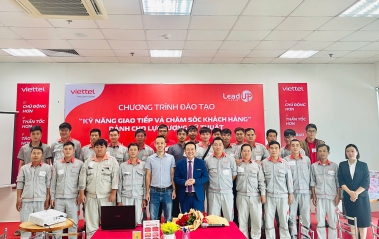
Opening Ceremony of the Training Program “Communication and Customer Care Skills” for the Technical Workforce of Viettel Hue
In order to enhance standardized communication skills and improve the effectiveness of customer care activities at the local level for the technical workforce, Lead-UP Practical Management Academy is honored to collaborate with Viettel Hue in delivering the training series titled “Communication and Customer Care Skills.” At the opening session, the class was honored to welcome the presence of Mr. Nguyen Phuc Bao Huy – Deputy Director of Technical Division, and Ms. Chau Thi Ngoc Hai – Head of General Administration Department of Viettel Hue.
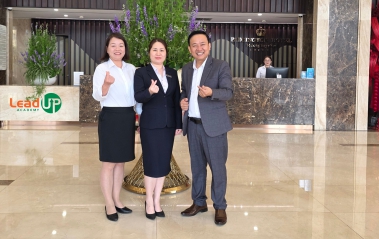
Lead-UP Academy Launches Consulting and Training Project for Paddington Hotel Halong Bayview
Lead-UP Academy has officially launched the consulting and training project titled “Standardizing Service Mindset and Behaviors – Creating Customer Experience Excellence”, together with the internal engagement campaign “Happiness Begins from the Heart” dedicated to Paddington Hotel Halong Bayview.

Looking Back on a Proud Journey in 2025
The year 2025 marked a proud milestone in the formation and development journey of Lead-UP Academy – the Practice-Based Management Academy of Lead-UP. From the very beginning, we deliberately chose a clear and consistent operating philosophy...
Lead-UP Academy Implements On-the-Job Training & Coaching Program
With the aim of improving work efficiency, data processing quality, and management reporting capability of the Accounting – Finance Department, Lead-UP Academy has recently implemented an On-the-Job Training & Coaching (OJT) program with the theme “Applying AI to Enhance Performance”, designed exclusively for the Accounting – Finance Department (AFD) of Dong Do No.6 Construction Company.
Lead-UP Academy Ready to Accompany the Da Nang Young Entrepreneurs Association
On December 26, 2025, Lead-UP Academy officially became a member of the Da Nang Young Entrepreneurs Association. This is not merely our participation in a reputable organization within the business community of Da Nang City, but a deliberate choice of partnership with a clear orientation: to contribute professional expertise, share practical value, and together with the Association build a community of entrepreneurs who learn, take action, and develop sustainably.
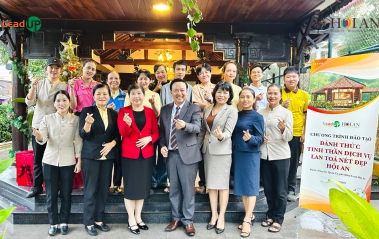
Closing of the training program: “Awakening the service spirit – Spreading the beauty of Hoi An”
After a period of serious and focused implementation, the hands-on training program “Awakening the Service Spirit – Spreading the Beauty of Hoi An,” jointly organized by Lead-UP Academy, Hoi An Tourism – Service Joint Stock Company, and Hoi An Hotel, officially concluded, leaving positive impressions and meaningful transformations among the participating team.
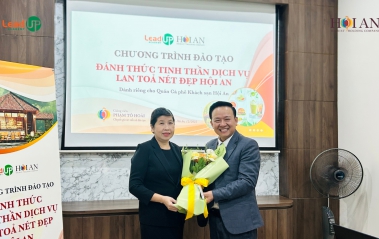
Opening of the training program: “Awakening the service spirit – Spreading the beauty of Hoi An”
On December 20, 2025, Lead-UP Academy, in collaboration with Hoi An Tourism – Service Joint Stock Company, officially launched the training program “Awakening the Service Spirit – Spreading the Beauty of Hoi An.” The program is designed for the staff of the Hoi An Hotel Café, held in the presence of the Board of Management and representatives of relevant units.
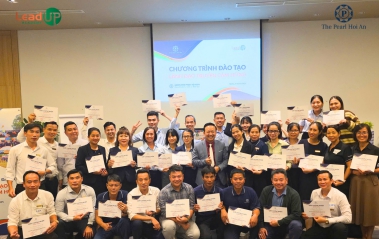
Closing Ceremony of the “Inspirational Leadership” Training Program for the Management Team of The Pearl Hội An
On the afternoon of November 26, 2025, at The Pearl Hội An Hotel, the “Inspirational Leadership” training program delivered by Lead-UP Academy officially concluded after two days of intensive, practical, and highly interactive learning.
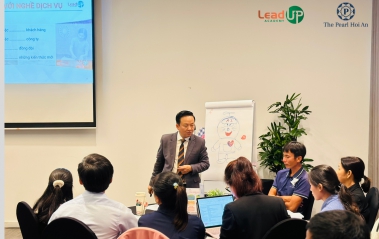
Opening Ceremony of the “Inspirational Leadership” Training Program for the Management Team of The Pearl Hội An
On November 25, 2025, at The Pearl Hội An Hotel, Lead-UP Academy officially launched the training program “Inspirational Leadership,” designed specifically for the hotel’s management and leadership team. The program aims to strengthen leadership capability, managerial thinking, and the ability to create positive influence within a high-standard hospitality environment.
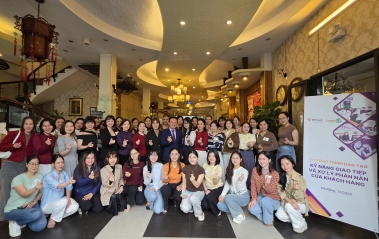
Lead-UP Academy is honored to accompany TPBank Da Nang in the “5 NOs” training program
On November 23, 2025, Lead-UP Academy officially accompanied TPBank Da Nang in the training program “Communication Skills & Customer Complaint Handling” – a course developed based on detailed TNA results, learner surveys, mystery shopper findings, and the practical needs of the Da Nang cluster. This program was directly delivered by Lecturer Phạm Tô Hoài (Consultant and Trainer at Lead-UP Academy).
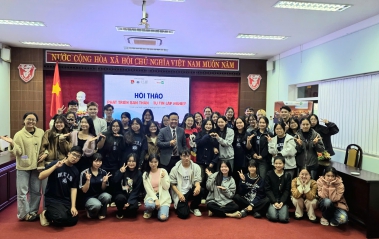
“Personal Development – Confidence for Career Success” Training Program for Students of the Faculty of International Studies – Hue University
The training program “Personal Development – Confidence for Career Success” was delivered to nearly 100 students. This program is part of the collaboration aimed at enhancing career readiness and helping students build a strong personal foundation in an increasingly competitive job market.
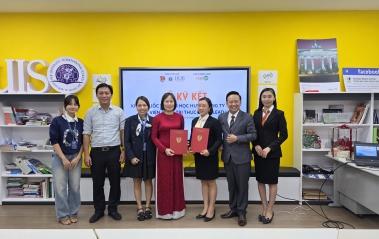
Signing Ceremony between Lead-UP Academy and the Faculty of International Studies – Hue University
On November 19, 2025, in Hue, Lead-UP Academy and the Faculty of International Studies – Hue University officially signed a strategic Memorandum of Understanding. This event marks an important milestone, establishing a long-term partnership between the two institutions in enhancing training quality, strengthening business connections, and developing young human resources in Central Vietnam.
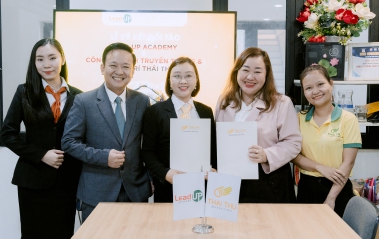
Lead-UP Academy and Thai Thu Marketing sign a strategic cooperation agreement for enterprise training and consulting development
On November 19, 2025, in Hue, the Practical Management Academy Lead-UP (Lead-UP Academy) and Thai Thu Media & Entertainment Co., Ltd. (Thai Thu Marketing) officially signed a Memorandum of Understanding for strategic cooperation, marking an important milestone in their journey to create value for the Vietnamese business community.
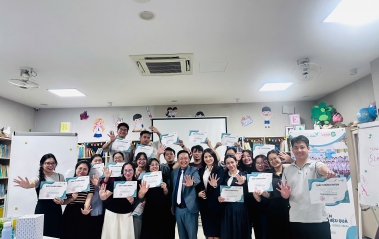
Closing Ceremony of the Training Program “Effective Enrollment Consulting” for the Admissions Department of Sky-Line Education System
On the afternoon of November 2, 2025, in Da Nang, the training program “Effective Enrollment Consulting – Empathy, Commitment, Companionship,” jointly organized by Lead-UP Academy and the Sky-Line Education System, officially concluded after two days of dynamic, practical, and inspiring learning.
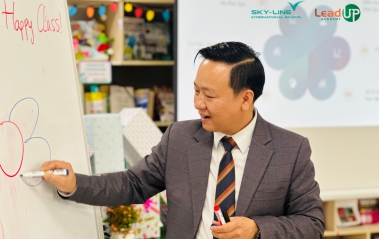
Opening Ceremony of the Training Program “Effective Enrollment Consulting” for the Admissions Team of Sky-Line Education System
On the morning of November 1, 2025, in Da Nang, the atmosphere at the Sky-Line Education System was filled with excitement and positive energy as Lead-UP Academy officially launched the training program “Effective Enrollment Consulting.”
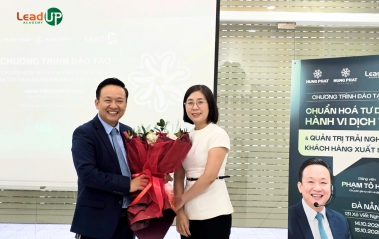
Closing Ceremony of the Training Program “Standardizing Service Mindset, Behaviors & Managing Excellent Customer Experience” at Hung Phat Real Estate System
After two energetic and inspiring days of learning, the training program “Standardizing Service Mindset, Behaviors & Managing Excellent Customer Experience”, exclusively designed by Lead-UP Academy for Hung Phat Real Estate System, officially came to a close — leaving participants with lasting impressions and valuable lessons.
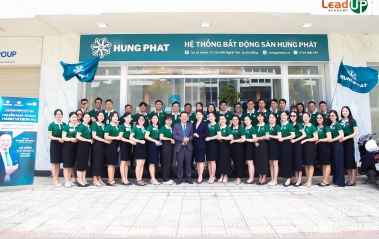
Opening Ceremony of the Training Program “Standardizing Service Mindset, Behaviors, and Managing Excellent Customer Experience” at Hung Phat Real Estate System
Today, at the headquarters of Hung Phat Real Estate System, the atmosphere was vibrant and full of energy as Lead-UP Academy officially launched the training program “Standardizing Service Mindset, Behaviors, and Managing Excellent Customer Experience.” This program was exclusively designed by Expert Pham To Hoai and the Lead-UP team specifically for Hung Phat, with the goal of standardizing service behaviors and building a unique customer experience culture of excellence.
CELEBRATING VIETNAM ENTREPRENEURS’ DAY – OCTOBER 13
October 13 marks a special occasion to honor and pay tribute to Vietnamese entrepreneurs – those who have been at the forefront of the nation’s economic journey, creating jobs, nurturing aspirations for growth, and contributing to the proud legacy of Vietnam in the era of global integration.
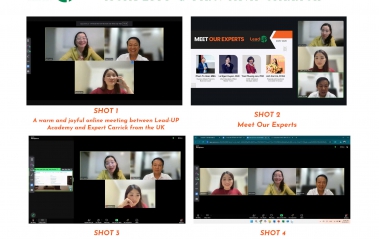
COLLABORATION BETWEEN LEAD-UP ACADEMY & ENTREPRENEUR NGUYEN THI ANH DAO (UNITED KINGDOM)
Expanding the Gateway for Practical Training and International Business Connection
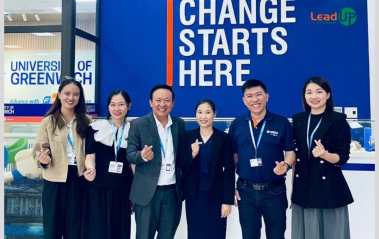
LEAD-UP ACADEMY AND GREENWICH VIETNAM UNIVERSITY DISCUSS COLLABORATION TO DEVELOP PRACTICAL SKILLS AND CAREER COMPETENCIES FOR STUDENTS
In an open and positive spirit, Lead-UP Academy had a meeting with Greenwich Vietnam University – Da Nang Campus to discuss directions for collaboration in skill training, career development, and enterprise connection for students.
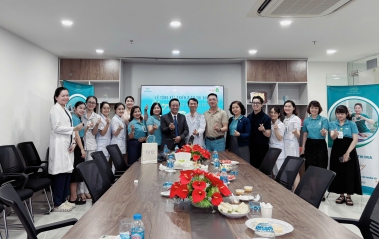
THE 21-DAY JOURNEY OF HEALING WITH A COMPASSIONATE HEART AT VIET AN EYE HOSPITAL – DANANG, VIETNAM
And on this meaningful day, in Da Nang, we – the Lead-UP Academy team – together with Viet An Eye Hospital Danang, concluded a warm, human-centered, and deeply emotional journey through the “Customer Experience Management Excellence” Project and the “21 Days of Healing with a Compassionate Heart” Campaign.
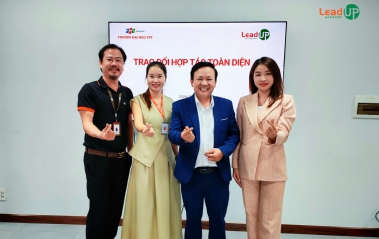
LEAD-UP ACADEMY AND FPT UNIVERSITY DA NANG DISCUSS COMPREHENSIVE COLLABORATION FOR YOUTH DEVELOPMENT
In a spirit of openness and sustainable partnership, Lead-UP Academy held a working session with FPT University Da Nang to explore opportunities for a comprehensive collaboration in training, student development, and enterprise connection.
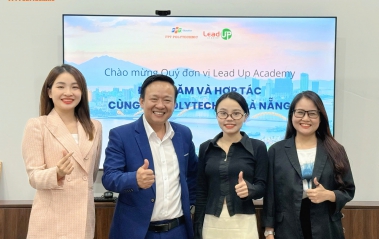
LEAD-UP ACADEMY AND FPT POLYTECHNIC EXPAND COLLABORATION TO DEVELOP PRACTICAL HUMAN RESOURCES
In a spirit of openness and sincerity, the meeting between Lead-UP Academy and FPT Polytechnic Da Nang took place with a shared commitment to developing a generation of dynamic, creative students who are ready to meet real-world business demands.
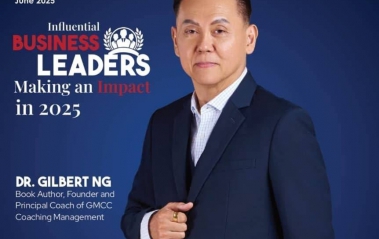
Lead-UP Academy Welcomes Dr. Gilbert Ng
In 2015, Expert Pham To Hoai first met Mr. Gilbert Ng in Vietnam, when he invited him to conduct a leadership development program for the executive team of Vingroup. Later, in 2021, Mr. Hoai once again invited Dr. Gilbert to participate in the program “Accompanying Vietnamese Entrepreneurs”, where his insightful, practical, and inspiring teaching style left a strong impression.
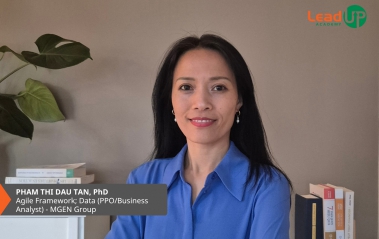
Welcome Dr. Pham Thi Dau Tan to Lead-UP Academy
In the world of management, digital transformation, and team development, there are individuals who not only conduct research but also turn knowledge into practical action. Dr. Pham Thi Dau Tan, currently working at MGEN Group (France), is one of those experts — a researcher, Agile Framework specialist, and Business Analyst with a systematic mindset and an international vision.
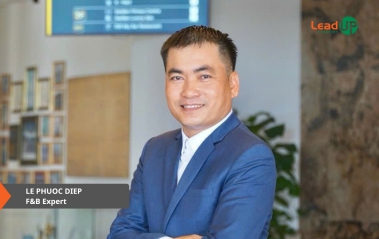
Welcome Culinary Expert Le Phuoc Diep to Lead-UP Academy
In the journey of developing human capability for the Hospitality – Service – Culinary industries, Lead-UP Academy believes that the best teachers are those who have lived the profession and mastered it through real experience. It is our great honor to welcome Culinary Expert Le Phuoc Diep – Director of Food & Beverage at Wyndham Danang Golden Bay Hotel – as a Training and Consulting Expert for Lead-UP Academy’s practical programs in Hotel, Service, and High-End Culinary Management.
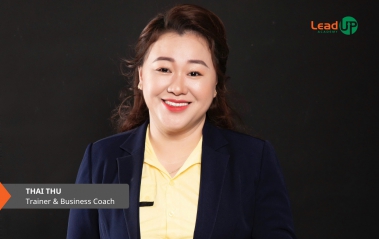
Welcome Trainer & Business Coach Thai Thu, Thai Thu Marketing, and 3T Academy as Strategic Partners of Lead-UP Academy
We are delighted to welcome Trainer & Business Coach Thai Thu and announce the strategic partnership between Thai Thu Marketing, 3T Academy, and Lead-UP Academy — two leading training and consulting organizations in Central Vietnam.
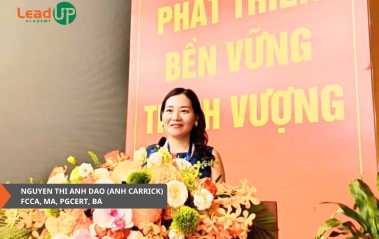
Welcome Businesswoman Nguyen Thi Anh Dao (Anh Carrick) and C&T Accountants to Lead-UP Academy
On its journey to expanding a global network of experts, Lead-UP Academy is honored to welcome Businesswoman Nguyen Thi Anh Dao (Anh Carrick) – Chief Financial Officer of C&T Accountants Ltd (United Kingdom) – and the C&T Accountants team as the Academy’s strategic partner in Europe.
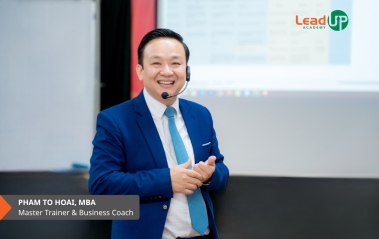
Lead-UP Academy is delighted to announce the collaboration of Expert Pham To Hoai
It is therefore a great honor for Lead-UP to officially welcome the collaboration of Phạm Tô Hoài as Lead-UP Academy’s Chairman—an expert who has devoted nearly 20 years to the field of corporate training and management consulting.
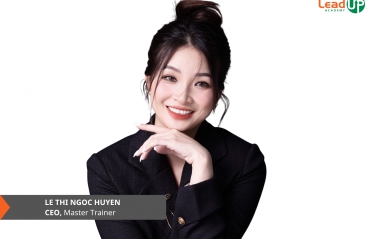
The Story of Lê Thị Ngọc Huyền – COO Lead-UP Academy
In the journey of establishing and developing Lead-UP Academy of Practical Management, we have always believed: a strong organization begins with strong people. One of the greatest inspirations for that belief is COO Lê Thị Ngọc Huyền.
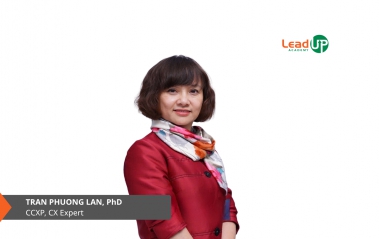
Lead-UP Academy is honored to welcome Dr. Trần Phương Lan – Certified Customer Experience Professional (CCXP)
On our journey to become the leading hands-on management academy in Vietnam, Lead-UP Academy is committed to partnering with renowned and influential experts, both locally and internationally. These collaborations are not only about enhancing training quality but also about giving Vietnamese enterprises access to advanced, practical, and highly applicable management knowledge.
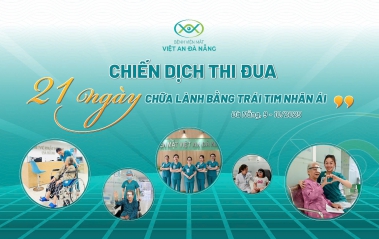
Kick-off Ceremony of the “21 Days of Healing with a Compassionate Heart” Campaign
On September 13, 2025, at Viet An Eye Hospital Da Nang, the Kick-off Ceremony of the “21 Days of Healing with a Compassionate Heart” Campaign took place in a solemn, determined, and inspiring atmosphere. This event followed immediately after the training program “Excellence in Customer Experience Management”, designed and delivered exclusively for the hospital by the experts and associates of Lead-UP Academy.
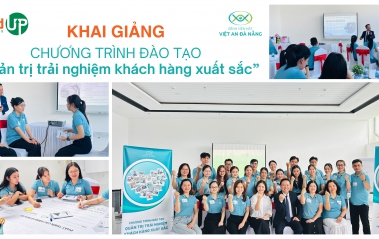
2-Day Training at Viet An Eye Hospital Da Nang: Kick-off of the “21 Days of Healing with a Compassionate Heart” Journey
Over the past two days, Lead-UP Academy has partnered with the entire team of doctors, nurses, technicians, and frontline staff at Viet An Eye Hospital Da Nang in the training program “Excellence in Customer Experience Management” – a program tailor-made to fit the hospital’s specific operations.


