
 VI
VI EN
EN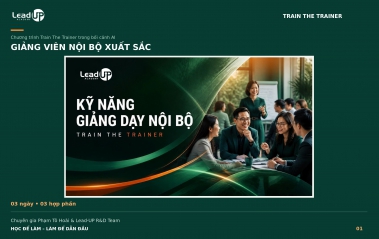
Lead-UP Academy Enhances Its Train The Trainer Program: Integrating AI, Refining Learning Materials, and Strengthening Practical Application
With the direct involvement of Phạm Tô Hoài – Expert and Founder of Lead-UP Academy and his colleagues in the Lead-UP R&D Team, the “Excellence in Internal Training – Train The Trainer” program has undergone research-informed enhancement for delivery over three days. The program integrates three components: AI applications in instructional design; facilitation, inspirational delivery, and on-the-job training skills; and teaching practice, assessment, and lesson refinement.
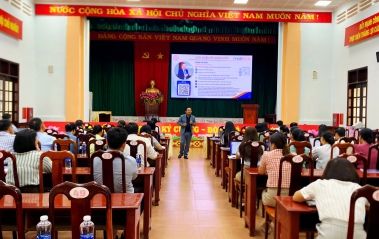
THE 5 × 3 FORMULA: Lessons from the Practice of Training in AI Applications in Public Administration
A successful AI training programme should bring about changes in how participants work: enabling them to select appropriate tasks, use tools effectively, verify outputs, and progressively improve the quality of services provided to citizens. Achieving these outcomes depends critically on coordination among the training provider, the organisations sending participants, and the participants themselves.

LEAD-UP ACADEMY ENHANCES ITS METHODOLOGY FOR DEVELOPING SOP SYSTEMS: INTEGRATING “CO-CREATION” AND “DESIGN THINKING”
As part of its research and development efforts in operations management solutions, Lead-UP Academy is enhancing and refining its consulting methodology for developing Standard Operating Procedure (SOP) systems for service businesses. Integrating “Co-Creation” and “Design Thinking”, the enhanced methodology emphasizes employee participation, customer experience, and practical applicability in day-to-day operations.
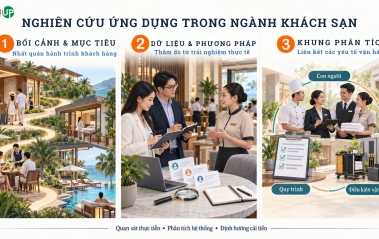
Lead-UP Academy: Applied Research and Solution Development for Comprehensive Service Quality Enhancement in the Hospitality Industry
Drawing on recent observations at hotels and resorts in Hội An, Đà Nẵng, Quảng Ninh, Thanh Hóa, Nghệ An, and other locations, Lead-UP Academy’s team of experts is developing an approach that integrates operations management, service standardization, and workforce capability development. This work reflects a research and development (R&D) approach grounded in organizational contexts, with a focus on improvements that can be implemented, monitored, and evaluated in practice.
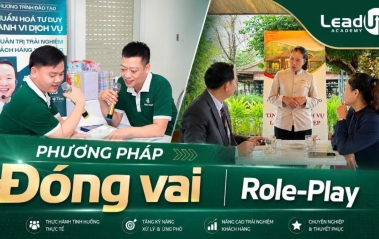
The “Role-Play” Method in Corporate Training at Lead-UP Academy
An employee may understand the principles of active listening yet still lose composure when a customer becomes angry. A manager may know how to provide constructive feedback but still use language that hurts an employee. A sales professional may be familiar with the consultation process but become uncertain when customers raise objections, compare prices, or delay their decisions.

THE GROUP DISCUSSION METHOD IN PRACTICE-BASED TRAINING: FROM MULTIDIMENSIONAL PERSPECTIVES TO ACTION-ORIENTED PROPOSALS
Within Lead-UP Academy’s training philosophy, group discussion is not merely an activity designed to make the classroom more dynamic. It is an active learning method that enables participants to draw upon their practical experience, examine issues from multiple perspectives, engage in evidence-based debate, and collaboratively develop solutions that can be applied in the workplace.


