
 VI
VI EN
EN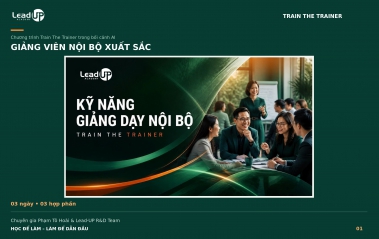
Lead-UP Academy Enhances Its Train The Trainer Program: Integrating AI, Refining Learning Materials, and Strengthening Practical Application
With the direct involvement of Phạm Tô Hoài – Expert and Founder of Lead-UP Academy and his colleagues in the Lead-UP R&D Team, the “Excellence in Internal Training – Train The Trainer” program has undergone research-informed enhancement for delivery over three days. The program integrates three components: AI applications in instructional design; facilitation, inspirational delivery, and on-the-job training skills; and teaching practice, assessment, and lesson refinement.
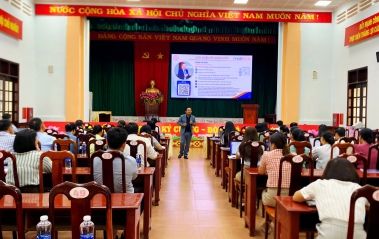
THE 5 × 3 FORMULA: Lessons from the Practice of Training in AI Applications in Public Administration
A successful AI training programme should bring about changes in how participants work: enabling them to select appropriate tasks, use tools effectively, verify outputs, and progressively improve the quality of services provided to citizens. Achieving these outcomes depends critically on coordination among the training provider, the organisations sending participants, and the participants themselves.
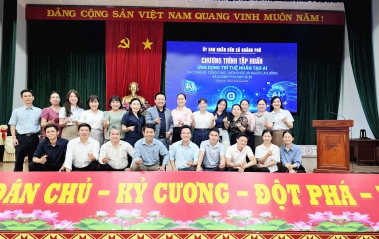
ENHANCING WORK PRODUCTIVITY TO BETTER SERVE THE PUBLIC: LEAD-UP ACADEMY COMPLETES AI TRAINING PROGRAMME IN QUẢNG PHÚ COMMUNE
Following the class for personnel of the Party Committee and Vietnam Fatherland Front, Lead-UP Academy of Practical Management, in collaboration with MobiFone Đắk Lắk – a branch of MobiFone Telecommunications Corporation, delivered the training course “Applying AI in Public Administration” for officials, civil servants, and public employees working within the People’s Council and People’s Committee of Quảng Phú Commune, Đắk Lắk Province. This class also concluded the training programme held on 29–30 September 2026, which aimed to translate technological knowledge into improved workplace effectiveness at the local level.
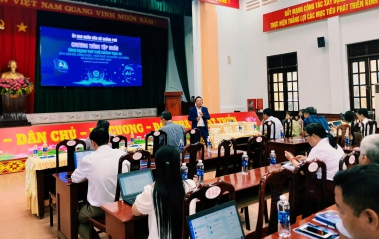
LEAD-UP ACADEMY PARTNERS WITH MOBIFONE ĐẮK LẮK TO STRENGTHEN AI APPLICATION CAPABILITIES AMONG OFFICIALS IN QUẢNG PHÚ COMMUNE
On 29–30 September 2026, Lead-UP Academy of Practical Management, in collaboration with MobiFone Đắk Lắk – a branch of MobiFone Telecommunications Corporation, delivered the training programme “Applying AI in Public Administration – Enhancing Work Efficiency and the Quality of Services for Residents of Quảng Phú Commune.” The programme commenced with a class for officials, civil servants, and public employees working within the Party Committee and Vietnam Fatherland Front of Quảng Phú Commune, Đắk Lắk Province.

LEAD-UP ACADEMY ENHANCES ITS METHODOLOGY FOR DEVELOPING SOP SYSTEMS: INTEGRATING “CO-CREATION” AND “DESIGN THINKING”
As part of its research and development efforts in operations management solutions, Lead-UP Academy is enhancing and refining its consulting methodology for developing Standard Operating Procedure (SOP) systems for service businesses. Integrating “Co-Creation” and “Design Thinking”, the enhanced methodology emphasizes employee participation, customer experience, and practical applicability in day-to-day operations.
Lead-UP Academy Partners with Global Factories Group: “Better Together” – Embracing Differences, Strengthening Team Cohesion
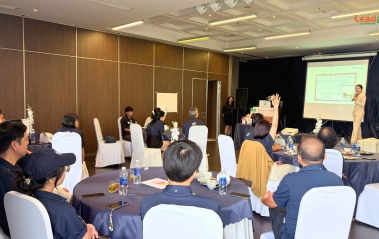
A dynamic day of learning, unexpected challenges, and practical lessons in teamwork marked the success of the “Better Together – Understand - Align - Move Together” training program for employees of Global Factories Group (GF), delivered in collaboration with Lead-UP Academy.


