
 VI
VI EN
EN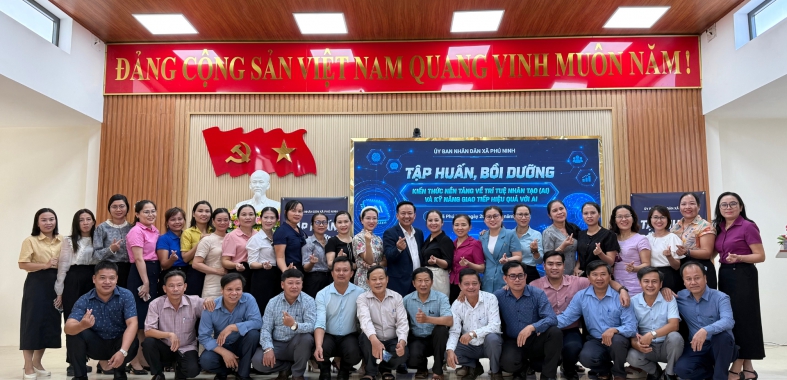
AI TRAINING IN PUBLIC ADMINISTRATION: FROM A TRAINING COURSE TO REAL-WORLD APPLICATION CAPABILITY
Following a series of training programmes entitled “Applying AI in Public Administration”, jointly organised by MobiFone Da Nang and communes across Da Nang City, Lead Expert Phạm Tô Hoài - Founder of Lead-UP Academy - shared his reflections on the initial outcomes, areas requiring improvement, and the conditions necessary for AI training to generate meaningful value.
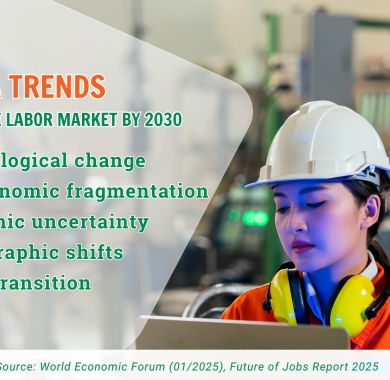
AI and the Future of the Labor Market: Major Transformations and Implications for Vietnamese Enterprises
Over the coming decade, the global labor market is projected to undergo a period of significant transformation, driven simultaneously by several macro-level forces such as technological advancement, geoeconomic fragmentation, economic uncertainty, demographic shifts, and the green transition. These dynamics are continuously reshaping employment structures, skill requirements, and the ways in which work is organized within enterprises.
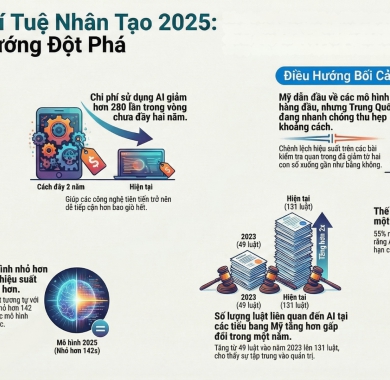
Proposed Action Recommendations for Vietnamese Enterprises Based on the AI Index Report 2025
Among the numerous AI index reports released in 2025, the AI Index Report 2025 by Stanford HAI stands out as one of the most comprehensive and insightful publications. Its breadth and depth provide a holistic view of AI’s development trajectory over the past year. This eighth edition—the most extensive to date—paints a panoramic picture of 2024, a pivotal year in which AI transitioned from a subject of technological curiosity to a genuine economic and scientific driving force.

AI Is Not for Organizations Lacking Operational Discipline
Over the past two years, Artificial Intelligence (AI) has become one of the most frequently discussed topics within the Vietnamese business community, particularly among small and medium-sized enterprises (SMEs). From business networking events and digital transformation seminars to internal management discussions, AI is often positioned as a “lever” capable of accelerating growth, optimizing costs, and strengthening competitive advantage.

Vietnamese Businesses: Three Major “Bottlenecks” in the Digital Transformation Journey
Digital transformation is no longer a new concept. From large corporations to SMEs, everyone talks about applying technology, AI, and data to boost productivity and optimize operations. However, in reality, most Vietnamese businesses are still “transforming” in words but not truly “changing” in practice. Many technology projects remain unfinished, software systems are left unused, employees feel frustrated, and leaders grow impatient — “We’ve invested, but where are the results?” The problem doesn’t lie in technology itself. It lies in people and the approach.

Vietnamese Businesses: Three Major “Bottlenecks” in the Digital Transformation Journey
Digital transformation is no longer a new concept. From large corporations to SMEs, everyone talks about applying technology, AI, and data to boost productivity and optimize operations. However, in reality, most Vietnamese businesses are still “transforming” in words but not truly “changing” in practice. Many technology projects remain unfinished, software systems are left unused, employees feel frustrated, and leaders grow impatient — “We’ve invested, but where are the results?” The problem doesn’t lie in technology itself. It lies in people and the approach.


