CONTEXT: THE LABOR MARKET IS ENTERING A PERIOD OF PROFOUND TRANSFORMATION
Over the coming decade, the global labor market is projected to undergo a period of significant transformation, driven simultaneously by several macro-level forces such as technological advancement, geoeconomic fragmentation, economic uncertainty, demographic shifts, and the green transition. These dynamics are continuously reshaping employment structures, skill requirements, and the ways in which work is organized within enterprises.
According to the Future of Jobs Report 2025 published by the World Economic Forum (WEF), the report is based on a survey of more than 1,000 global enterprises representing over 14 million workers across 22 industries and 55 economies, with the aim of forecasting employment and skills trends for the period 2025–2030.
Within this context, artificial intelligence (AI)—particularly generative AI—has emerged as one of the most influential transformative forces. Its impact extends beyond technological development and directly affects organizational structures, management models, and the operational mechanisms of enterprises.
FIVE MAJOR FORCES SHAPING THE LABOR MARKET
The WEF report identifies five key transformative forces that are shaping the global labor market.
.png) 1. Technological Change
1. Technological Change
The rapid advancement of artificial intelligence, big data, cloud computing, and robotic automation is fundamentally altering the nature of work.
According to WEF survey findings:
- 86% of businesses believe that AI and information-processing technologies will transform their business models.
- Robotics and automation are also expected to become major drivers of transformation across many industries.
AI can simultaneously create opportunities and displacement. Projections suggest that emerging technologies may generate approximately 11 million new jobs, while simultaneously replacing around 9 million existing jobs in the coming years.
2. Geoeconomic Fragmentation
Trade tensions, supply chain restructuring strategies, and shifts in global production are reshaping the global employment landscape.
As a result, enterprises are increasingly required to:
- restructure supply chains;
- develop localized production capabilities;
- strengthen risk management capacity in an increasingly volatile market environment.
3. Economic Uncertainty
Inflation, financial market volatility, and unstable economic growth are directly influencing corporate workforce strategies.
In this context, many organizations are reducing demand for routine administrative roles while increasing demand for positions that can enhance operational efficiency, such as:
- data specialists;
- AI professionals;
- logistics and supply chain experts.
4. Demographic Shifts
Population aging in many developed countries and the rapid growth of youth populations in emerging economies are placing significant pressure on global employment systems.
Projections indicate that over the next decade:
- 1.2 billion young people in emerging economies will enter working age;
- while only approximately 420 million new jobs are expected to be created.
This gap highlights the urgent need for large-scale reskilling and upskilling initiatives.
5. Green Transition
The transition toward a low-carbon economy is generating new categories of employment, including:
- renewable energy engineers;
- electric vehicle technology specialists;
- environmental and sustainability engineers.
This transition is expected to become one of the most important sources of job creation in the coming period.
HOW AI IS RESHAPING THE STRUCTURE OF WORK
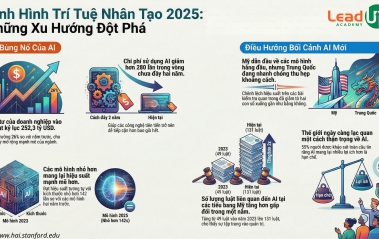
A study conducted by Anthropic (2026) provides an empirical perspective on how AI is currently being used in the workplace.
Unlike theoretical projections, this study analyzes millions of real interactions between users and the AI system Claude in order to identify the types of tasks that workers are assigning to AI systems.
The results indicate that:
- 68% of tasks assigned to AI are tasks that AI can perform directly;
- 29% require additional supporting tools;
- only around 3% involve tasks that AI cannot yet handle.
This finding reflects an important emerging trend: workers are gradually learning how to allocate tasks between humans and AI systems.
AI HAS NOT YET CAUSED MASS UNEMPLOYMENT - BUT IT IS CHANGING HIRING PATTERNS
.png)
One of the most common concerns surrounding AI is the possibility that it will trigger large-scale unemployment. However, current evidence suggests that the impact of AI is gradual yet structurally significant.
According to the Anthropic study:
- occupations such as software developers, customer service representatives, and financial analysts are among those most affected by AI;
- however, there is no clear evidence that AI has increased overall unemployment rates.
Instead, the impact appears in another form: a decline in hiring rates, particularly among young workers entering the labor market.
Some data indicate that employment opportunities in AI-affected occupations have declined by 6–16% for workers aged 22–25, primarily because companies are hiring fewer new entrants.
In other words, AI is restructuring the labor market through changes in hiring patterns and job organization, rather than through immediate job elimination.
SKILLS THAT WILL BECOME INCREASINGLY IMPORTANT
The WEF report indicates that the skills gap is widening significantly across occupational groups.
The most important skills for the future workforce include:
- analytical thinking;
- adaptability and flexibility;
- technological and data literacy;
- systems thinking;
- lifelong learning capability.
In particular, skills such as resilience, flexibility, and agility are increasingly viewed as the factors that distinguish growing occupations from declining ones.
THE PERSPECTIVE OF LEAD-UP ACADEMY
.png)
From the perspective of Lead-UP Academy, these transformations are not merely technological developments; rather, they fundamentally relate to organizational capability.
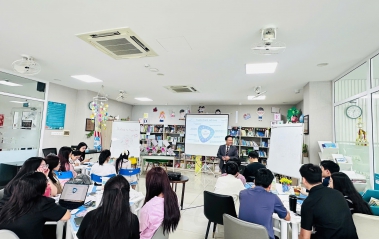
Through numerous consulting and training projects across industries such as banking, hospitality, services, and retail, we have observed three major shifts currently taking place within enterprises.
1. Jobs Are Not Disappearing—But Their Structure Is Changing
AI rarely replaces an entire profession; instead, it tends to replace specific tasks within a profession.
As a result, many job positions are becoming increasingly hybrid in nature. For example:
- sales professionals need to understand data;
- operations staff need to use AI tools;
- middle managers must manage both people and technology.
Consequently, traditional competency models are gradually being replaced by multi-functional and multi-tasking capability frameworks supported by AI.
2. Competitive Advantage Lies Not in AI Itself, but in How Organizations Use It
AI is becoming more accessible and widely available than ever before. Therefore, competitive advantage does not lie simply in possessing AI technology.
Rather, it lies in the ability of organizations to:
- reorganize workflows;
- redesign job roles;
- upgrade workforce capabilities.
Organizations that successfully integrate people, processes, and technology will achieve significant productivity gains.
3. Training and Workforce Development Will Become Strategic Capabilities
In an environment characterized by rapid change, workforce training and development can no longer be viewed merely as supporting activities.
Instead, they are becoming strategic capabilities of organizations.
Enterprises need to develop:
- professional internal training systems;
- continuous upskilling and reskilling programs;
- sustainable learning cultures within their organizations.
These elements provide the foundation that enables organizations to adapt effectively to the evolving labor market in the age of AI.
CONCLUSION
Artificial intelligence is not merely a new technology. It is becoming a powerful force that is restructuring the global labor market and redefining how enterprises operate.
In the coming period, successful organizations will not be those that attempt to resist change. Rather, they will be those that:
- understand emerging transformation trends;
- redesign work models;
- invest strongly in developing human capabilities.
In this context, organizational capability and human capability development will become decisive factors enabling enterprises to adapt to the future of work.
References
- World Economic Forum (01/2025), Future of Jobs Report 2025.
- Anthropic (05/03/2026), The Impact of AI on the Labor Market: A New Measurement and Early Evidence.
- Vietnamese translation and interpretation: Bùi Tấn Việt — CEO SePay.
---
Lead-UP Academy | Learn to Act – Act to Lead

 VI
VI EN
EN