
 VI
VI EN
EN




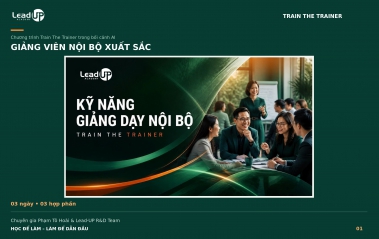
Lead-UP Academy Enhances Its Train The Trainer Program: Integrating AI, Refining Learning Materials, and Strengthening Practical Application
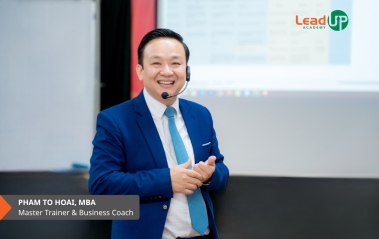
With the direct involvement of Phạm Tô Hoài – Expert and Founder of Lead-UP Academy and his colleagues in the Lead-UP R&D Team, the “Excellence in Internal Training – Train The Trainer” program has undergone research-informed enhancement for delivery over three days. The program integrates three components: AI applications in instructional design; facilitation, inspirational delivery, and on-the-job training skills; and teaching practice, assessment, and lesson refinement.
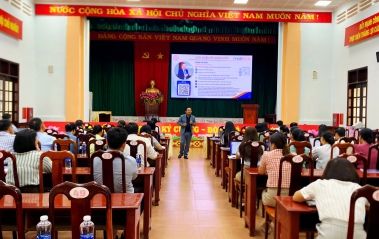
THE 5 × 3 FORMULA: Lessons from the Practice of Training in AI Applications in Public Administration
A successful AI training programme should bring about changes in how participants work: enabling them to select appropriate tasks, use tools effectively, verify outputs, and progressively improve the quality of services provided to citizens. Achieving these outcomes depends critically on coordination among the training provider, the organisations sending participants, and the participants themselves.

LEAD-UP ACADEMY ENHANCES ITS METHODOLOGY FOR DEVELOPING SOP SYSTEMS: INTEGRATING “CO-CREATION” AND “DESIGN THINKING”
As part of its research and development efforts in operations management solutions, Lead-UP Academy is enhancing and refining its consulting methodology for developing Standard Operating Procedure (SOP) systems for service businesses. Integrating “Co-Creation” and “Design Thinking”, the enhanced methodology emphasizes employee participation, customer experience, and practical applicability in day-to-day operations.
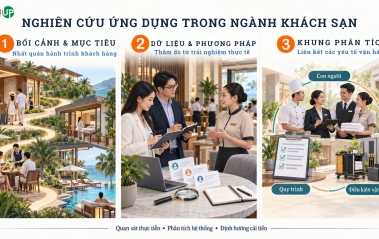
Lead-UP Academy: Applied Research and Solution Development for Comprehensive Service Quality Enhancement in the Hospitality Industry
Drawing on recent observations at hotels and resorts in Hội An, Đà Nẵng, Quảng Ninh, Thanh Hóa, Nghệ An, and other locations, Lead-UP Academy’s team of experts is developing an approach that integrates operations management, service standardization, and workforce capability development. This work reflects a research and development (R&D) approach grounded in organizational contexts, with a focus on improvements that can be implemented, monitored, and evaluated in practice.
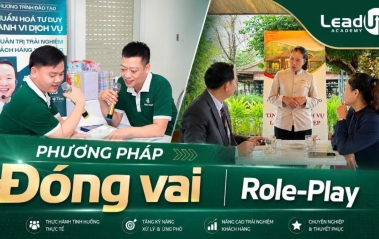
The “Role-Play” Method in Corporate Training at Lead-UP Academy
An employee may understand the principles of active listening yet still lose composure when a customer becomes angry. A manager may know how to provide constructive feedback but still use language that hurts an employee. A sales professional may be familiar with the consultation process but become uncertain when customers raise objections, compare prices, or delay their decisions.

THE GROUP DISCUSSION METHOD IN PRACTICE-BASED TRAINING: FROM MULTIDIMENSIONAL PERSPECTIVES TO ACTION-ORIENTED PROPOSALS
Within Lead-UP Academy’s training philosophy, group discussion is not merely an activity designed to make the classroom more dynamic. It is an active learning method that enables participants to draw upon their practical experience, examine issues from multiple perspectives, engage in evidence-based debate, and collaboratively develop solutions that can be applied in the workplace.
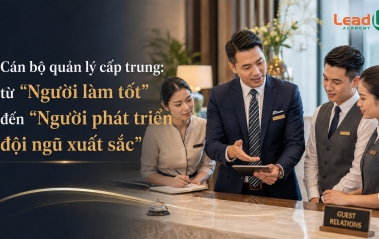
Middle Managers: From “Good Performers” to “Excellent Team Developers”
In many enterprises, especially service organizations such as hotels, restaurants, retail businesses, banks, customer service centers, and similar sectors, middle managers are often appointed because they are strong professional performers, understand the work, demonstrate a high sense of responsibility, and are capable of solving problems in daily operations. However, a very common reality is that a good performer is not necessarily a good instructor or an effective developer of people.
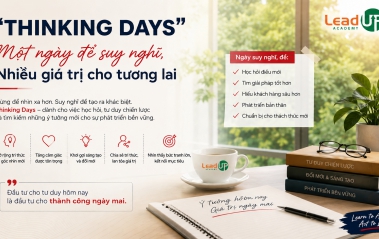
“Thinking Days” – Why Should Organizations Give Employees Time to Think?
In many organizations today, most of employees’ and managers’ time is consumed by day-to-day operational activities: responding to emails, attending meetings, solving emerging issues, chasing project deadlines, and delivering KPIs.
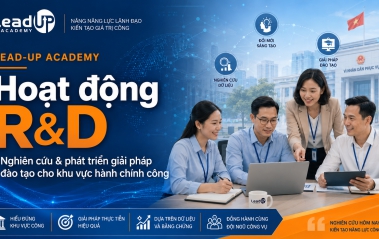
Lead-UP Academy Strengthens R&D Activities for Training Solutions Serving the Public Administration Sector
In the context of digital transformation exerting a profound impact on the operating models of agencies and organizations, enhancing technological capability, digital mindset, and adaptability among public officials and civil servants has become an increasingly practical requirement. Beyond the mere use of tools, public administration units today need a workforce capable of working more effectively in digital environments, processing information more quickly, coordinating more efficiently, and serving citizens and organizations in a more convenient and transparent manner.
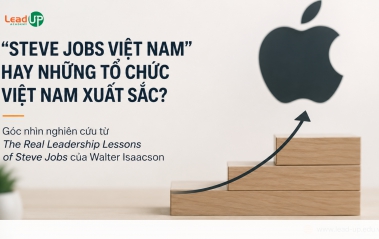
“VIETNAMESE STEVE JOBSES” OR OUTSTANDING VIETNAMESE ORGANIZATIONS?
Steve Jobs is often regarded as a symbol of innovation and success in modern business history. However, according to Walter Isaacson’s analysis published in Harvard Business Review, the most valuable management lessons from Steve Jobs do not lie in his personal style or inspirational stories, but in the way he built an organization capable of generating innovation continuously and sustainably.
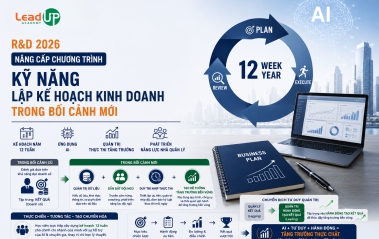
R&D 2026 | Upgrading the “Business Planning Skills” Program in the New Context
Markets are changing too rapidly. Customer behavior continues to shift. Pressure on revenue growth, customer retention, and competition is intensifying. Meanwhile, AI is beginning to directly impact how businesses analyze data, forecast growth, and manage team performance. As a result, the role of leadership teams and managers can no longer stop at merely “planning”; it must evolve into the capability of “managing growth execution,” especially at branch-level operations within service-oriented business organizations.
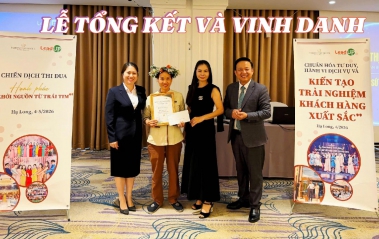
“Happiness begins from the heart” - An inspiration that drives transformation
In the service industry, many organizations aspire to build a professional, consistent, and distinctive service culture. However, a considerable number of businesses still begin this journey through rigid regulations, imposed standards, or control mechanisms that place increasing pressure on employees, particularly frontline staff who interact directly with customers. While such approaches may create short-term compliance, they rarely generate genuine transformation in mindset, emotions, and service behavior from within.
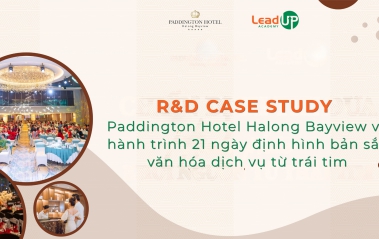
R&D CASE STUDY: Paddington Hotel Halong Bayview and the 21-Day Journey of Shaping a Heart-Centered Service Culture Identity
In many service-oriented businesses, particularly within the hospitality industry, corporate culture development is often discussed as a long-term objective. However, the greatest gap does not lie in the willingness to change, but in the organization’s ability to transform cultural values into consistent daily operational behaviors.
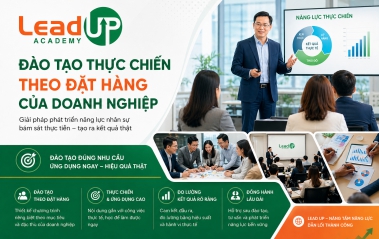
LEAD-UP ACADEMY: RESEARCH AND CONTINUOUS IMPROVEMENT IN TRAINING AND OPERATIONAL TRANSFORMATION
In training and operational consulting projects, the greatest challenge does not lie in designing content, but in the ability to transform that content into tangible changes in behavior and customer experience. For this reason, Lead-UP Academy approaches each program not as a standalone training course, but as a continuous R&D loop, in which real-world data from learners and operations plays a central role in guiding adjustment decisions.

R&D 2026: Developing the Outsourced Marketing Department Model
A New Approach to Optimizing Marketing Operations for Enterprises in the New Context. Based on the strategic collaboration between Lead-UP Academy and Thai Thu Marketing, our R&D team has jointly conducted research and expanded Lead-UP’s solution ecosystem with an effective and optimized model: the Outsourced Marketing Department.
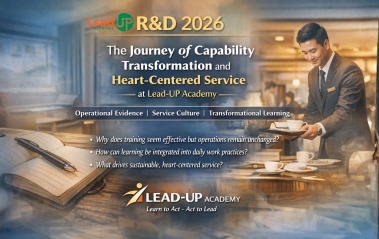
R&D 2026 | The Journey of Capability Transformation and Heart-Centered Service at Lead-UP Academy
Over many years of delivering Learning & Development (L&D) programs for Vietnamese enterprises—particularly within service operations—Lead-UP Academy has consistently observed a recurring phenomenon: training programs are highly rated and widely shared, yet meaningful changes in day-to-day work practices emerge slowly and lack sustainability. Once a training program concludes and external experts withdraw, organizational behaviors often revert to their previous state.

R&D 2026 | From Practice-Based Research to the Banking Training Program Portfolio
In 2026, every bank already possesses clearly defined strategies and strategic directions. However, when examining these strategies closely, one critical aspect remains difficult to see clearly: organizational capability—the ability to translate strategy into consistent, day-to-day actions across every touchpoint.
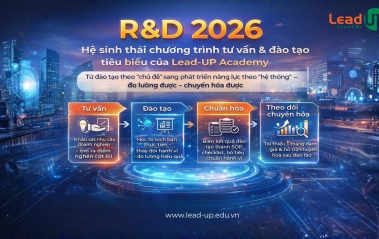
R&D 2026 | The Ecosystem of Flagship Consulting & Training Programs by Lead-UP Academy
This article is synthesized from the R&D initiatives of Lead-UP Academy and is intended for organizations seeking to transition from topic-based training to a systemic, capability-based development approach—one that is measurable, sustainable, and capable of generating real organizational transformation.
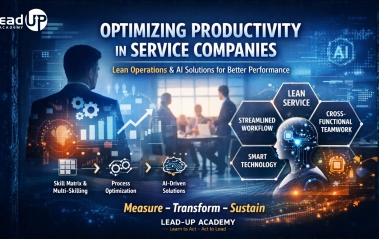
R&D 2026: PRODUCTIVITY OPTIMIZATION SOLUTIONS FOR SERVICE COMPANY OPERATIONS
From Multi-Skilling Mindset to Lean Operations and AI Adoption. In the context where service companies are facing increasing pressure from rising operational costs, shortages of qualified talent, and ever-higher customer experience expectations, labor productivity has become a critical survival factor. However, productivity in service organizations cannot be improved merely by “working faster” or “pushing KPIs harder.”
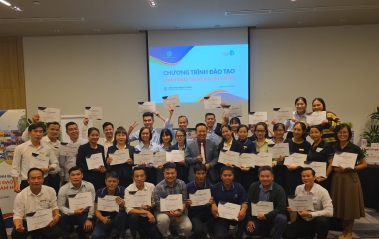
R&D 2026 | Hospitality Training under the Outsourced Training Department Model
Vietnam’s Hospitality and Tourism sector is entering a fundamentally new stage of development. Recent recovery should no longer be interpreted merely as an effort to restore occupancy levels, but rather as a comprehensive challenge of enhancing operational standards, repositioning customer experience, and developing a sustainable workforce amid the following conditions...
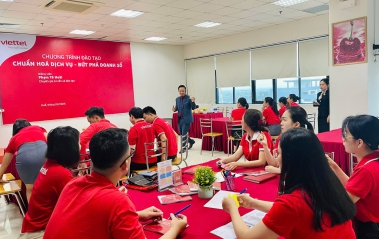
2026 and the New Capability Race in the Telecommunications – ICT Industry
Over the past three years, the Telecommunications – Information & Communications Technology (ICT) industry has entered a phase of “mandatory restructuring.” The market is saturated, competition in data services is increasingly fierce, and customer behavior is changing faster than the speed of infrastructure upgrades. AI is disrupting how businesses operate. And notably, group–corporation structures are continuously merging, streamlining, and redesigning processes.
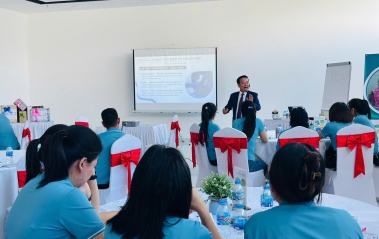
Outsourced training department – A comprehensive solution for modern enterprises
From practical research to an all-in-one, action-oriented training solution – designed to optimize resources, enhance capabilities, and build a leading workforce. In the context of lean operations and resource optimization, many organizations aspire to develop their workforce but lack a dedicated training department. In reality, most businesses assign training responsibilities to concurrent employees — resulting in programs that are often formalistic, insufficiently in-depth, and not aligned with the business strategy of each department.
Reimagining Admissions with Sky-Line – Putting Parents and Students at the Center
In its ongoing journey to nurture genuine educational values, Sky-Line Education System continues to advance with a special training program designed exclusively for its Admissions Team, titled “Effective Admissions Consulting – Empathy, Commitment, and Companionship”, led by Expert Phạm Tô Hoài from the Lead-UP Academy for Practical Management.
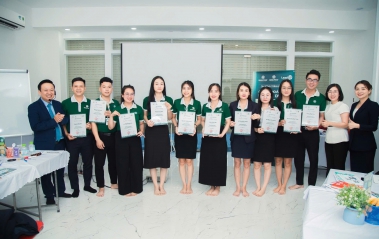
REVEALING THE SECRET BEHIND THE SUCCESS OF HUNG PHAT REAL ESTATE’S PRACTICAL TRAINING PROGRAM
The training program “Standardizing Service Mindset & Behavior – Managing Exceptional Customer Experience”, designed and delivered by Lead-UP Academy, has officially concluded with highly positive feedback and strong appreciation from both Hung Phat Real Estate’s Board of Directors and all participating learners.
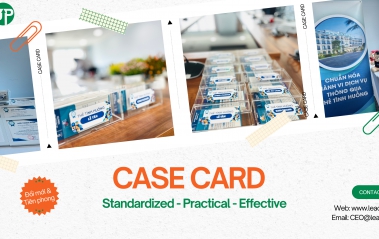
R&D at Lead-UP: Developing the Case Card Training Method
At Lead-UP Academy, we have repeatedly observed a common reality during training sessions with service enterprises: each employee handles situations differently. Some are flexible and skillful; others rigidly follow SOPs, or even become confused and respond defensively. The result? Service quality becomes inconsistent, customer experiences lack uniformity, and businesses struggle to establish their own “standard” of service.

Applying Game Theory in Training: Turning Classrooms into Engaging and Dynamic Arenas
Over many years of delivering practical training, the experts at Lead-UP Academy have often witnessed the same scene: a quiet classroom, learners diligently listening and taking notes, yet lacking genuine excitement and active participation. We asked ourselves: How can we create a learning environment where participants not only listen, but truly engage, interact, and experience the classroom as something memorable?

Why Does a Training Academy Need R&D?
In today’s era, where businesses are facing unprecedented disruptions – from digital transformation and global competition to the ever-increasing expectations of customers and employees – we believe training can no longer stop at simply “delivering knowledge” as it once did.


