Following a series of training programmes entitled “Applying AI in Public Administration”, jointly organised by MobiFone Da Nang and communes across Da Nang City, Lead Expert Phạm Tô Hoài - Founder of Lead-UP Academy - shared his reflections on the initial outcomes, areas requiring improvement, and the conditions necessary for AI training to generate meaningful value.
The following article synthesises insights from an interview with Lead Expert Phạm Tô Hoài after he had directly delivered a series of artificial intelligence application programmes for officials, civil servants, public employees, and personnel working at commune-level administrative agencies and public-sector units across Da Nang City.
Based on his teaching experience and close engagement with learners, Phạm Tô Hoài maintains that AI training in the public administration sector should not be limited to introducing new tools or teaching participants how to write prompts. More importantly, it is a process of enabling the workforce to adopt new mindsets, develop more effective working methods, and strengthen its adaptability in response to the increasingly demanding requirements of digital transformation.
A programme can only be considered truly effective when learners progress from “knowing about AI” to “knowing how to use AI”, and ultimately to “applying AI to address real-world work tasks” in a proactive, accurate, and responsible manner.
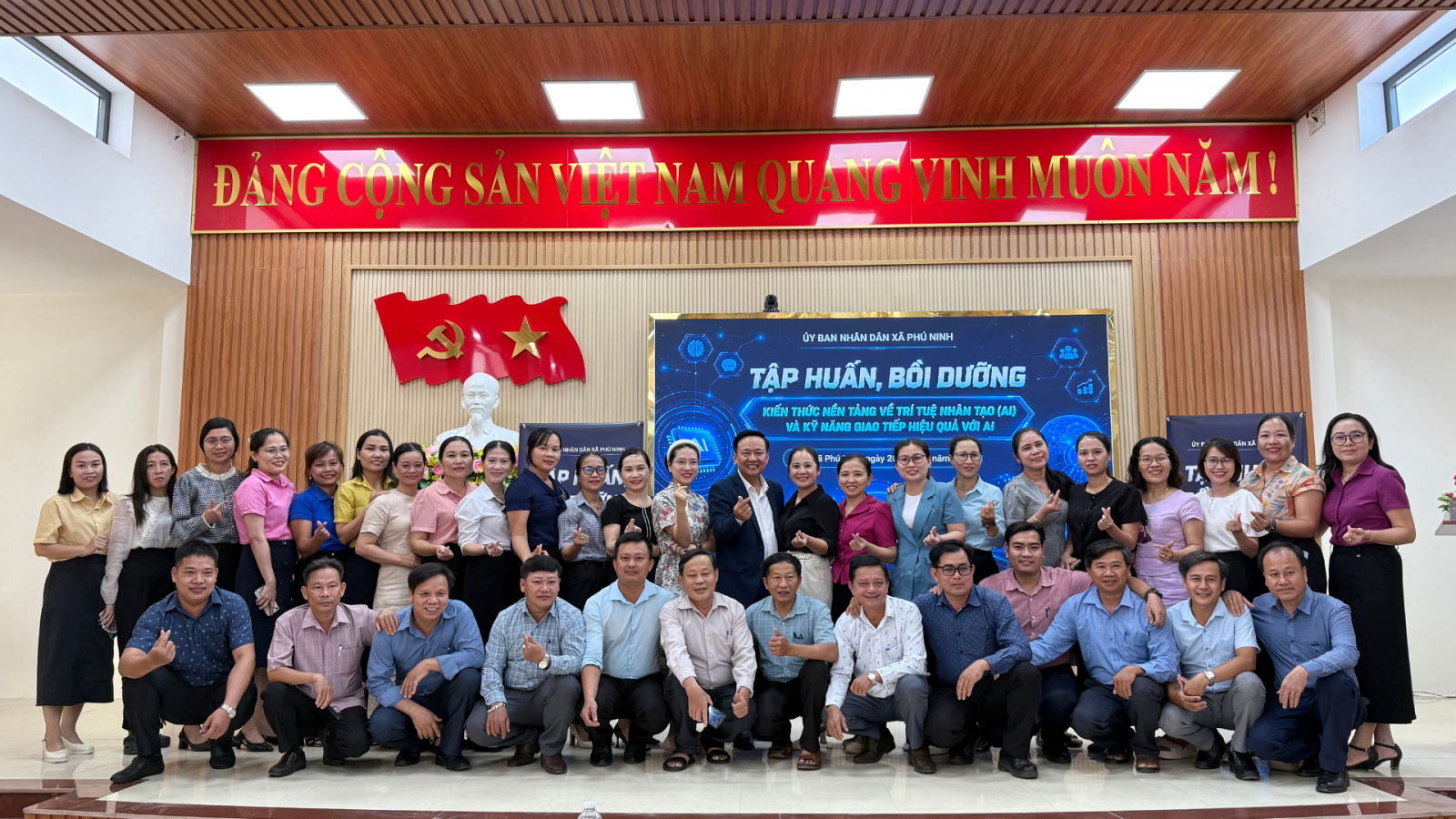
04 POSITIVE INDICATORS FROM PRACTICAL IMPLEMENTATION
1. Active leadership direction and role-modelling
One of the factors contributing to the seriousness and effectiveness of the programmes was the attention, direction, and active involvement of commune leaders. When leaders participate directly, provide encouragement, and set an example throughout the learning process, officials, civil servants, and public employees are more willing to embrace new approaches and become more proactive in practice. Strengthening digital capabilities cannot be regarded solely as a requirement for subordinates. The participation of organisational leaders helps reinforce the message that continuous learning, innovation, and technology adoption are shared responsibilities across the entire organisation.
2. A strong willingness to learn has generated encouraging initial outcomes
Many learners demonstrated a positive learning attitude, a willingness to experiment with new working methods, and a gradual ability to overcome their initial hesitation towards AI.
During the programmes, participants practised applying AI to a range of tasks, including drafting and reviewing documents, consolidating reports, developing plans, processing data, communicating public policies, designing public information content, and providing guidance to citizens. These initial outcomes indicate that, when learners are guided through an appropriate methodology and given opportunities to practise on familiar tasks, officials, civil servants, and public employees are fully capable of adopting and leveraging AI to improve their work performance.
3. Effective coordination among stakeholders
The quality of a training programme does not depend solely on the trainer. Its effectiveness also derives from coordinated collaboration among the organising body, local leaders, programme coordinators, trainers, teaching assistants, and the agencies and units nominating participants. When programme objectives, content, schedules, learning conditions, and the responsibilities of each stakeholder are agreed upon from the outset, the programme can be delivered continuously, remain focused on its intended objectives, and minimise operational issues during implementation.
4. Post-training support groups provide essential continuity
Maintaining a post-training practice support group is another noteworthy positive feature. This collaborative space enables learners to continue asking questions, sharing emerging situations, and receiving guidance as they apply AI to real-world tasks. Post-training support also helps participants overcome hesitation, communicate more confidently with trainers, and gradually develop habits of continuous learning, experimentation, and improvement.

05 ISSUES THAT REQUIRE CANDID CONSIDERATION
Alongside the positive outcomes, practical implementation has also revealed several issues that need to be addressed to improve the quality of future programmes.
1. Training schedules and duration need to be more appropriate
AI training requires learners to remain focused, work directly with the tools, and continuously identify and correct errors during practice. If participants are simultaneously attending the programme, handling professional duties, answering telephone calls, or frequently leaving the classroom, they may struggle to keep pace and be unable to complete the required exercises.
As Lead Expert Phạm Tô Hoài observes: “If you are too busy, it may not be the right time to learn; once you begin learning, however, you should devote 100% of your attention to the learning process.”
The duration of each programme must also be sufficient for trainers to guide learners from foundational knowledge to more advanced applications. This is particularly important because participants do not possess the same levels of digital capability, background knowledge, or learning speed.
2. Class sizes should remain manageable
Many organisations wish to enrol large numbers of participants so that more people can gain exposure to AI. However, in a programme with a substantial hands-on component, an excessively large class reduces the trainer’s ability to observe, guide, and directly support individual learners. Without timely assistance, participants with limited digital skills may fall behind, gradually lose confidence, and discontinue their practice. Where large classes are unavoidable, the programme should involve additional teaching assistants, divide participants into smaller groups, and establish appropriate support mechanisms.
3. Infrastructure and equipment must meet practical training requirements
Computers, projection equipment, audio systems, power supplies, application accounts, and internet connectivity all have a direct impact on training quality. A single connectivity or equipment failure can disrupt the entire practice process. Technical conditions should therefore be thoroughly tested before the programme begins. The organising body should also prepare contingency arrangements to ensure that emerging issues can be resolved promptly.
4. Some learners continue to experience low confidence and apprehension towards technology
A limited willingness to learn among some participants does not necessarily result from a lack of seriousness. In some cases, it may arise from insufficient foundational digital skills, slow operational proficiency, reluctance to ask questions, or concern about being unable to keep pace with others. This situation requires trainers to provide step-by-step guidance, use accessible language, and create a psychologically safe learning environment in which participants are willing to ask, willing to try, willing to make mistakes, and willing to try again.
5. Pre-course communication has not received sufficient attention
Communication before the programme plays an important role in shaping learners’ expectations and attitudes. Participants need to understand why they are attending, what challenges the programme will help them address, and how they should prepare their equipment, accounts, data, and mindset. Effective pre-course communication can help shift learners from “having to attend training” to “wanting to learn”, and from merely complying with an organisational requirement to preparing proactively and being ready to apply their learning at work.
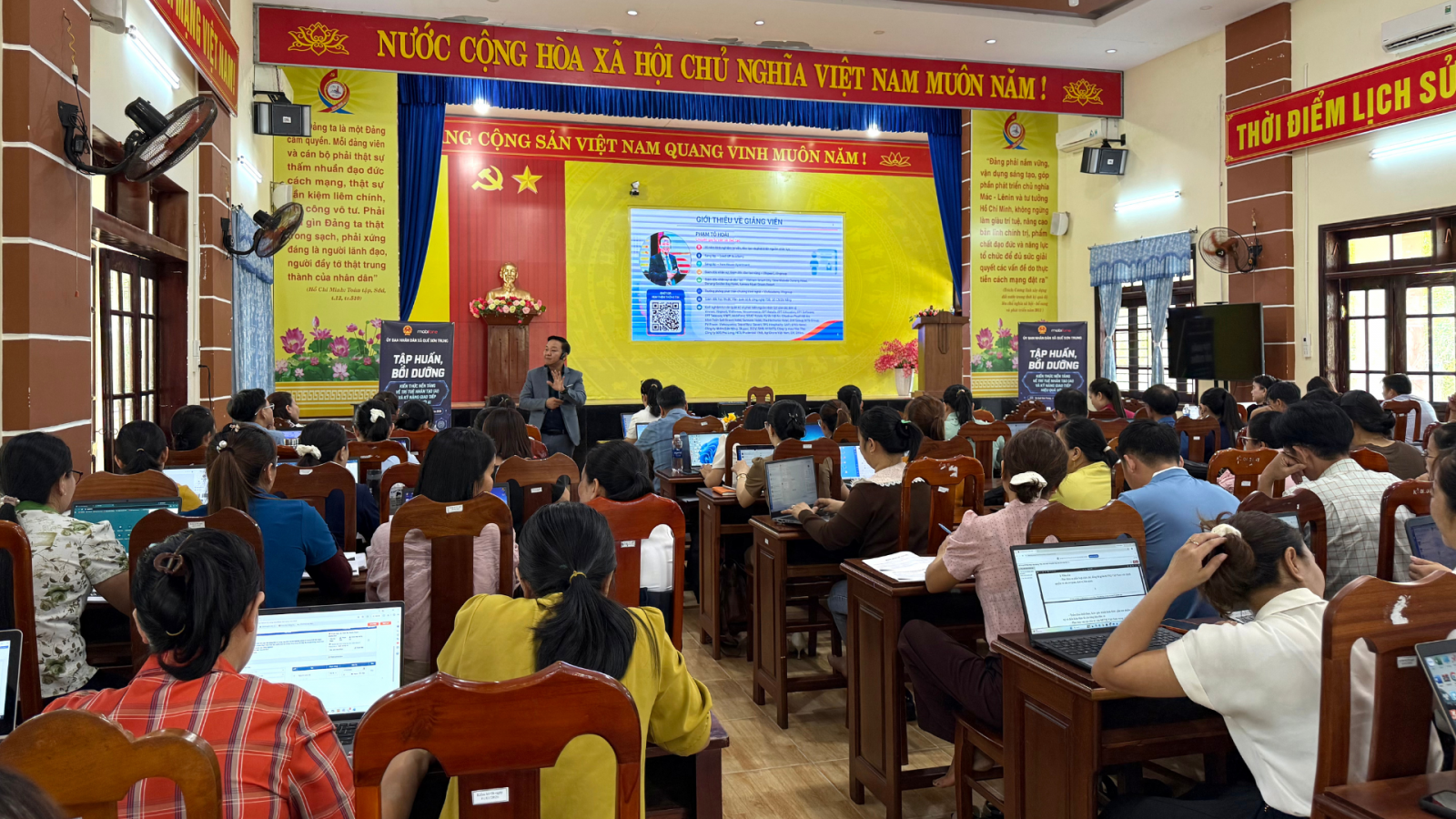
06 CONDITIONS FOR AI TRAINING TO DELIVER GENUINE VALUE IN PUBLIC ADMINISTRATION ORGANISATIONS
Based on his practical implementation experience, Lead Expert Phạm Tô Hoài argues that effective AI training results from an integrated system encompassing needs assessment, programme design, classroom delivery, and post-training support.
1. Selecting a professional training partner
A training provider should be capable of assessing needs, evaluating learners’ initial capabilities, and designing a programme aligned with the objectives of each locality. The provider must not only understand technology and AI tools, but also possess a sound understanding of the distinctive tasks, procedures, and professional standards of the public administration sector.
An appropriately designed programme should provide clear answers to three questions:
- What work-related tasks do learners need to address?
- At which stages can AI provide meaningful support?
- What tangible outputs should learners be able to produce after completing the programme?
Training partners should therefore not be selected solely on the basis of their ability to introduce a large number of tools. More important considerations include their capacity to design the programme, organise hands-on practice, assure the quality of learning outputs, and support participants throughout the application process.
2. Adopting a practice-oriented teaching methodology
AI training is unlikely to generate meaningful change if its content is limited to introducing concepts, explaining features, or demonstrating tools. An appropriate methodology should place learners’ real-world work at the centre of the training process.
Trainers should provide concise instruction, demonstrate key tasks, and allocate most of the programme time to direct computer-based practice. Lessons should progress from basic to more advanced levels: understanding fundamental principles, learning how to construct effective prompts, reviewing results, refining content, and applying AI to specific work-related tasks. During practice, trainers and teaching assistants should observe participants, identify errors, provide direct feedback, and guide learners in repeating and improving their work. The ultimate objective is not for learners merely to say that they have “heard about AI”, but for them to use AI independently to support their work after returning to their organisations.
3. Ensuring adequate learning conditions
A programme with a strong practical component requires stable computers, projection and audio equipment, power supplies, and internet connectivity. Each learner or group should have access to appropriate equipment for direct practice, rather than merely watching the trainer demonstrate tools on a screen.
The organising body should also prepare accounts for essential AI applications in advance. Where necessary, paid accounts should be provided to ensure access to the features required for practice and to maintain continuity throughout the learning process. Documents, templates, and data used in exercises must be appropriately prepared, reviewed, and anonymised. Learners should also be instructed not to upload personal information, confidential documents, or sensitive internal data to platforms that have not been formally assessed or authorised.
4. Conducting thorough research into the operational situations of each organisation
Every locality has a different organisational structure, service population, range of administrative procedures, and set of work requirements. Before the programme, trainers should therefore assess participants’ routine tasks, the difficulties they face, and the types of outputs they are expected to produce in their daily work.
Based on this assessment, the programme should develop exercises closely aligned with real-world requirements, such as drafting and reviewing documents; developing work plans; consolidating and analysing data; preparing periodic reports; converting lengthy documents into concise summaries; communicating public policies; designing public information content; and guiding citizens through administrative procedures. When participants practise using familiar situations, they are more likely to recognise the value of AI, retain the relevant methods, and apply them immediately. This is the fundamental distinction between a programme that merely introduces technology and one that develops real-world application capability.
5. Appropriately determining schedules, duration, participant profiles, and class sizes
Before organising a programme, the responsible unit should clearly identify the target participants, assess their levels of technological proficiency, and group them according to their professional roles or foundational capabilities. This process enables the programme to select more appropriate content, teaching pace, and exercises.
The programme duration must be sufficient for learners to acquire knowledge, practise, correct errors, and complete their outputs. During the training, participants should, as far as possible, be protected from having to handle their regular professional duties simultaneously. Class sizes should also remain manageable so that trainers can observe and support individual learners. Where large classes are necessary, additional teaching assistants should be assigned, participants should be divided into smaller groups, and more technologically proficient learners may be encouraged to support those with more limited skills.
6. Maintaining post-training support
The training course is only the beginning. After returning to their organisations, learners will encounter new situations, experience errors that did not arise in the classroom, or remain uncertain about how to refine AI-generated outputs. Without an appropriate support mechanism, many may quickly revert to their previous working methods.
The organising body and trainers should therefore maintain a post-training support group, assign short application-based tasks, respond to emerging questions, and share representative cases. Learners’ outputs may be reviewed periodically, with feedback provided on prompt design and guidance offered on assessing the accuracy and appropriateness of AI-generated content. Effective practices should be consolidated into prompt libraries, templates, or shared user guidelines so that teams can continue applying and improving them. Post-training follow-up helps transform learning from knowing how to use tools into developing sustainable capability, and from isolated experimentation into consistent everyday working practices.
From “knowing how to use AI” to “creating value”
The effectiveness of an AI training programme should not be evaluated solely by the number of participants, the number of tools introduced, or the level of enthusiasm observed in the classroom.
More meaningful outcomes lie in whether participants can use AI after the programme to reduce the time spent on repetitive tasks; improve the quality of documents and reports; consolidate, analyse, and present information more clearly; enhance coordination among departments; communicate public policies in more accessible language; and provide better support and services to citizens.
AI training in public administration should therefore be understood as a continuous journey: Learn Purposefully – Practise on Real Tasks – Verify Thoroughly – Provide Timely Support – Apply Consistently – Standardise Progressively.
Only when a programme is appropriately designed, effectively organised, grounded in real-world tasks, and reinforced through continued post-training support can AI genuinely become a tool for improving productivity, work quality, and the effectiveness of public service delivery.
---
Lead-UP Academy | Learn to Act – Act to Lead

 VI
VI EN
EN