
 VI
VI EN
EN



Leadership 2026: Leading by Example in Learning and Development
The year 2026 marks a period in which Vietnamese enterprises are simultaneously confronting multiple structural pressures: accelerating market dynamics, rising performance expectations, significant volatility in human resources, and an increasingly visible gap between strategy and execution. Within this context, Learning and Development (L&D) is no longer a supporting activity, but has become a critical factor in sustaining organizational competitiveness.
Not Because of AI: The Bottleneck of Transformation Lies in Leadership Itself
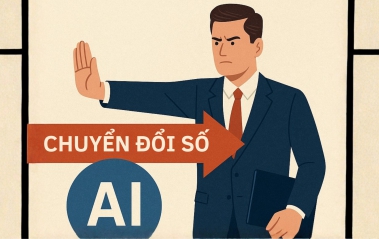
Over the past two years, artificial intelligence (AI) has rapidly become one of the most frequently discussed topics in executive meetings. Many organizations have invested significant time, budget, and attention in AI tools, digital platforms, and automation initiatives, driven by the expectation that technology will deliver higher productivity, greater operational efficiency, and more sustainable competitive advantage.

Inspirational Leadership – Not a Command
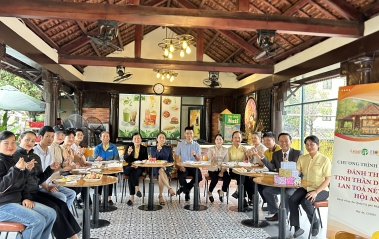
When the “Inspirational Leadership” training program for the leadership team of The Pearl Hội An came to an end, what stayed with us the most was not the knowledge delivered, but the shift we saw in the eyes, the attitudes, and the way leaders and managers began to ask questions. All of this reveals a clear truth: in today’s highly competitive landscape, no business can go far if its leaders remain still — stuck in place.

Culture and Ownership Mindset in the Era of Digital Transformation and AI
Today, as we step into the era of digital transformation and artificial intelligence (AI), many businesses are heavily investing in technology: ERP systems, big data, intelligent chatbots… Yet, there is an even more important “operating system” that is often overlooked—culture and ownership mindset. I once met a sales manager at a service company. He shared: “We have the latest technology, plenty of data, but the team still works with an employee-for-hire mentality—waiting for tasks, waiting for instructions. As a result, we fail to create any real differentiation from our competitors.”Today, as we enter the era of digital transformation and artificial intelligence (AI), many businesses have heavily invested in technology: ERP systems, big data, intelligent chatbots… Yet there is one critical “operating system” that is often overlooked—culture and an ownership mindset. I once spoke with a sales manager at a service company. He shared: “We already have new technology and plenty of data, but our team still works with an employee-for-hire mentality—waiting for tasks, waiting for instructions. As a result, we fail to create any real difference compared to our competitors.” That story strengthened my conviction: technology may accelerate a business, but people are the ones who set its true direction. That story reinforced my belief: technology can accelerate a business, but it is people who determine its direction.

Building Corporate Culture in the AI Era
When we consult and train businesses across various industries—from banking and telecommunications to logistics and hospitality—there is one question leaders often wrestle with: “How can we build a strong, cohesive corporate culture that also adapts swiftly to the digital and AI era?”

Beyond Limits Thinking – A Story for Vietnamese Businesses in the Age of AI
Once, in a conversation with the HR director of a large commercial bank, I asked: ‘What do you think is the most important factor when implementing AI into operations?’ He smiled and said: ‘Technology is not difficult, the real challenge is… the box in our heads.’ That statement reminded me of the book The Bottom of the Pool by Andy Andrews. He wrote that many people are proud of ‘thinking out of the box,’ but in fact, they are still limited by that very box. To truly break through, one must dare to step completely outside of it.


